Vulnerable Women Benefit (VWB) Program
19 Jul 2026
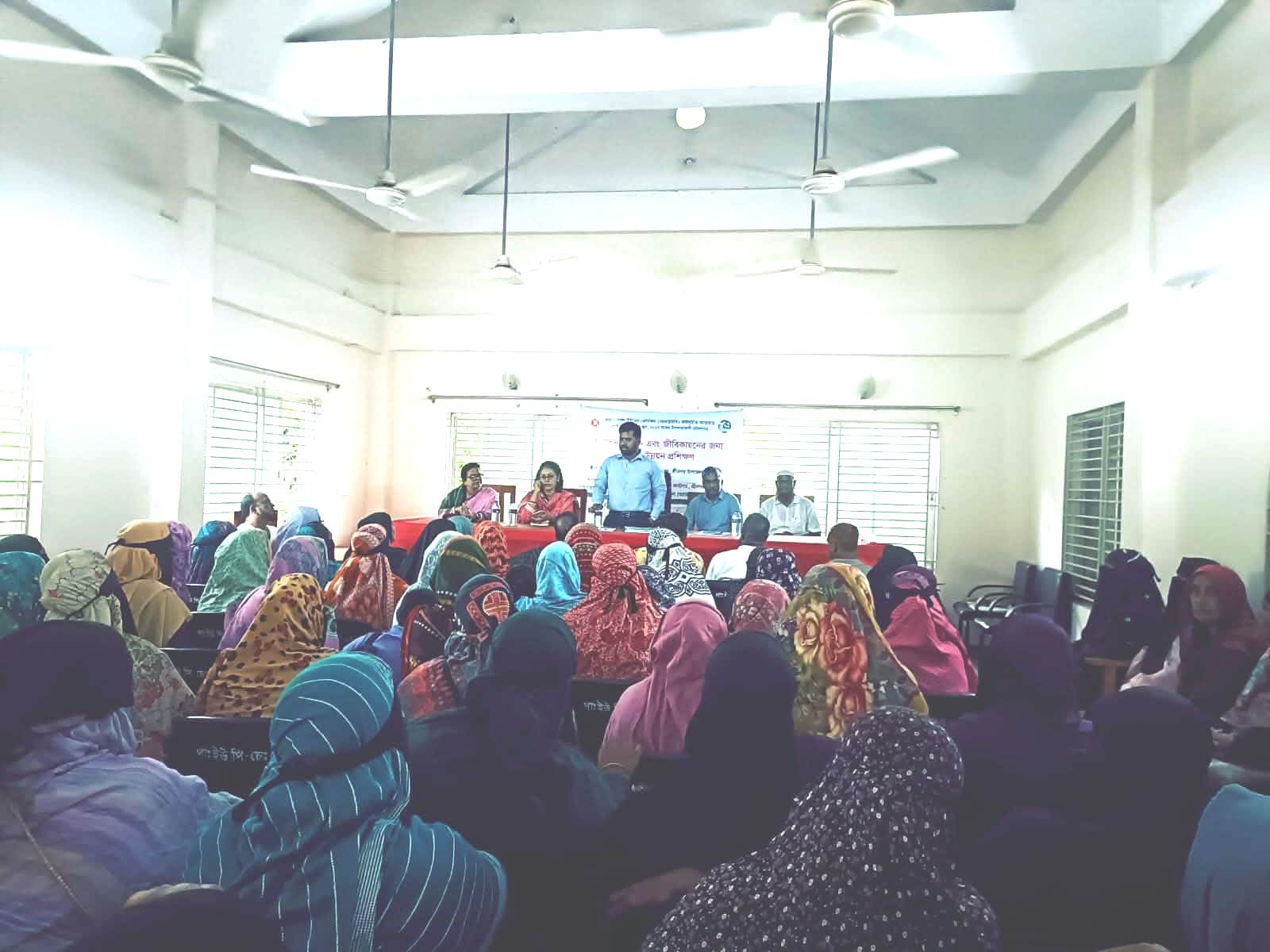
Bangladesh has a strong tradition of providing support to the poor through social safety nets, which account for about 14% of the national budget and reach 27% of households. Despite significant progress in poverty reduction, the social safety net system is complex and fragmented, which limits its ability to effectively address the challenges of rising urban poverty and climate change, especially in the context of the COVID-19 pandemic and the ongoing global food crisis. The VWB program, formerly known as the Vulnerable Group Development (VGD) program, plays a key role in this effort. It provides women with intensive skills development training as well as a monthly ration of 30.3 kg of fortified rice. These initiatives are designed to empower women by engaging them in income-generating activities. By 2030, the VWB program aims to support 3.2 million women in both rural and urban areas to establish microenterprises, enabling them to move out of extreme poverty.
The VWB program is currently being implemented in three upazilas of three districts in the 2025-2027 cycle. A total of 4,249 beneficiaries have been selected for two years under the VWB program. They will receive 30.3 kg of rice per month in the 2025-27 cycles until June/2027. Vulnerable Groups Development (VGD) is one of the largest safety-net programs supported by the World Food Programme (WFP). It targets poor and vulnerable women in Bangladesh. The ultimate goal of the program is to achieve sustainable improvement in the living standards of ultra-poor families.
The VWB program is being implemented by CEDAR (Concern for Environmental Development And Research) with funding from the Department of Women Affairs, Government of the People's Republic of Bangladesh.
Area of Operation: District: Narsingdi, Upazila: Sadar; District: Munshiganj, Upazila: Sreenagar; District: Noakhali, Upazila: Senbag.
Objectives of VWB Program:
• To provide training on various income-generating initiatives for self-employment.
• To provide assistance to beneficiaries to open their own bank accounts and regular savings.
• To provide management and assistance to obtain credit assistance; and
• To provide socio-economic empowerment of beneficiaries through provision of income-generating training, awareness and other support services.