Previous
Implementation Modalities of Our HIV/AIDS Prevention Program among Injecting Drug Users (IDUs)
Goal
To reduce the transmission of HIV and other blood-borne infections among Injecting Drug Users (IDUs), improve their health and well-being, and facilitate their access to comprehensive prevention, treatment, care, and support services while promoting social inclusion and reducing stigma and discrimination.
Objective
- - To reduce HIV transmission by promoting safer injecting practices and safer sexual behaviors among IDUs.
- - To increase knowledge and awareness of HIV/AIDS, Hepatitis B, Hepatitis C, other sexually transmitted infections (STIs), and overdose prevention.
- - To provide access to harm reduction services, including sterile needle and syringe distribution and safe disposal of used injecting equipment.
- - To encourage the consistent and correct use of condoms through education and free condom distribution.
- - To facilitate HIV testing, counseling, and referral to treatment, care, and support services for HIV-positive individuals.
- - To strengthen referral linkages with government health facilities and rehabilitation centers for drug dependence treatment and other healthcare services.
- - To reduce stigma, discrimination, and social exclusion faced by IDUs through community awareness and advocacy.
- - To build the capacity of peer educators and outreach workers to effectively deliver harm reduction and HIV prevention interventions.
- - To establish a monitoring and follow-up system to assess program effectiveness and improve service quality.
- - To contribute to the national HIV/AIDS prevention strategy by supporting evidence-based interventions for high-risk populations
Major Activities
- Methodology: Injection drug users are those who are primarily injectors and had injected in the previous year. The Drop in Center (DIC) under the project cater to the needs of IDUs, offering a place to talk to project staff and each other, pick up condoms, use the toilet and relax. Drop-ins provide a welcoming environment. DIC staff practice outmost confidentiality as well as maintain outmost respect and dignity to IDUs. The DIC is a safe place for all IDUs. DIC is a place where IDUs can come and talk about their own concerns without encountering hostility from other users or staff. DIC is located in an area within IDUs’ cohort to ensure easy access for local IDUs, and remain open at times when they require it. Since the first surveillance in 1998, the highest HIV prevalence rates in Bangladesh have been observed in IDU. This is coupled with continuing high-risk behaviors such as increased sharing of injecting equipment and a decline inconsistent condom use in sexual encounters with female sex workers. The IDU population is well integrated into the surrounding urban community, socially and sexually, increasing concern about the spread of HIV infection from this most-at-risk population. The following services and activities with emphasis on confidentialty and respect are being provided to the IDUs through the DIC:
- 1. Identification of the target group
- 2. BCC session on HIV/AIDS and STI
- 3. Counseling sessions
- 4. Outreach activities syringe/needle distribution and Syringe/needle Collection
- 5. Condom promotion and distribution
- 6. Abscess management
- 7. Sexual health check-up sessions
- 8. Human rights and life skills sessions
- 9. Formation of self-help groups
- 10. Diagnose and treat STI
- 11. Referral for VCT sessions
- 12. Treatment for general ailment and referral service
- 13. Provide Detoxification services in the community
- 14. Livelihood training for recovered IDUs
- 15. Skills development training of PE and Volunteers
- 1. Identification of Target Population
- Massive drive has been given, at the very inception of the DIC, to identify the target IDUs using existing mapping and to make a list of target population in different spots and update continuously without stigmatizing anyone. In addition, special efforts have also been given to discover out-of-mapping IDUs and spots around the target location. In both of the cases, confidentiality and respect have strictly been maintained.
- 2. BCC session on HIV/AIDS and STI
- BCC is one of the most important activities that have been provided through DIC. There is one room in the DIC for conducting BCC session. Every BCC session must contain at least one of the most important BCC activities.
- BCC is an interactive process with communities (as integrated with an overall program) to develop tailored messages and approaches using a variety of communication channels to develop positive behaviors, promote and sustain individual, community and societal behavior, and maintain appropriate behaviors. The basic framework in diagnosing a community, group or individual and bringing a change in behavior is based on following hierarchy (where applicable):
- The framework are being used to increase perception of risk-behavior, to develop the skills and capabilities of young drug users to promote and manage their own health and development, to foster positive change in youth behavior, as well as in their knowledge and attitudes and to work in partnership with families, schools, health services and communities to influence the social norms and policy environment within which young people function.
- BCC/IEC materials have been distributed in the BCC session. So, it is important to ensure available BCC/IEC materials with correct information in the DIC. Effective messages will help the audience to make a personal commitment to make the desired changes, to acquire the skills to implement the changes and to create an enabling environment for practicing the behavior. The effective ways of media to reach the audience will be Flip charts, Brochures, Slides, Posters, Cartoon strips, Videos, Audio tapes, Films, Plays, Music and Folk media. The messages like awareness on HIV, how to protect HIV through injecting practices and overdose & its consequences would be keep in aforesaid IEC/BCC materials. A good number of materials will be distributed through DIC. It could be either through BCC session or providing materials to those IDUs who are visiting the DIC for taking rest or recreation. Advocacy materials would be distributed through advocacy session or to those who are visiting DIC.
- 3. Counseling sessions
- Counseling is an important service for the IDU as they face lot of problems in their daily life. This could include counseling on HIV, Drug Use, STI, VCT and psychosocial issues faced by drug users. If the client is referred by the DIC in-charge/PE, or if the counselor is the first to meet a client, the counselor would talk with the client about the standard information about the DIC if this has not already been done (services, DIC rules) and about their personal issues. It is essential that counselors keep client information confidential, both from other clients and staff.
- Before session begins
- • Check if the client is a new visitor to the DIC or repeat client
- • If the client has accessed other services, obtain client’s file. Look through it, read it thorough and close the file.
- • Check what information may be required by the client
- During session
- Do not open file in front of the client. Create a ‘peer’ environment and not a bureaucratic one. Where possible do not have a table separating you and the client. Sit next to the table in a 90 degree angle.
- • Ask about background / history of the client ( if new client)
- • Identify risk behaviors
- • Based on risk behaviors, provide the appropriate counseling
- • Provide referral to services if indicated and patient willing to have it e.g. VCT, health care, drug treatment and rehabilitation etc.
- • Clients exhibiting signs of mental illness, suicidal behavior must be referred to professional mental health experts for proper services.
- After session
- • For new clients develop a new file including unique client identification code
- • Make the necessary notes in the file from the counseling session, including issues (discussion, observations, analysis, and any follow-up needed) and referrals
- • Fill in Daily Recording Sheet
- 4. Outreach activities and needle/syringe distribution and collection
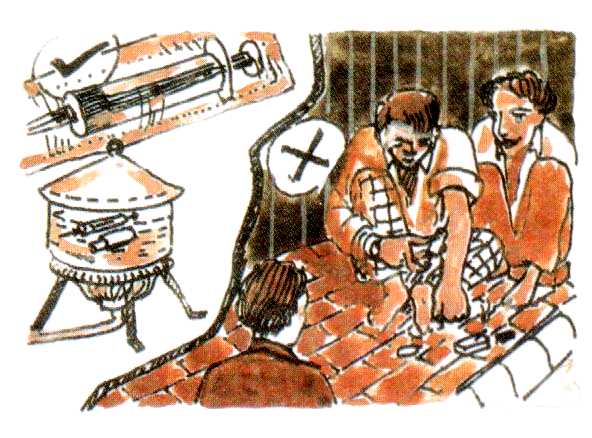
- Outreach activities will be performed by the outreach supervisor and peer educators. In this connection, the peer educators will play the pivotal role under the direct supervision of outreach supervisor. They will make appropriate communication with IDUs calling upon the spots of IDUs. Needle/syringes will be stored in the DIC, but DIC will not be used normally as distribution of needle/syringe unless it is emergence. DIC manager will be responsible for storing adequate needle/syringe in the DIC. Outreach supervisor/peer educator will collect the needle/syringes from the DIC manager in every morning and will distribute in the spots of IDUs where they are gathered daily. Normally peer educator will provide 1 syringe and 1 extra needle in exchange of a used one. But however, peer educator can provide more number of syringes and needles based on demand of IDUs. Outreach supervisor/peer educator will carry a bag where there will be two chamber/pockets; one for collected used syringes/needles and another for new syringes/needles.
- 5. Condom promotion, demonstration and distribution
- Condom is one of the most effective tools of preventing HIV. For IDUs, it is important as the IDUs have also sex practice with sex workers and almost half of them are married. The outreach supervisor/peer educator will distribute condoms as per need of the IDUs. Demonstration of condom is equally important as without knowing the proper use of condom, it is not workable. The peer educator will demonstrate it before distribution. Condoms will be distributed in the field but based on need the IDU can have it from the DIC and in that case DIC manager would maintain the record. The DIC management should keep attention that the IDUs and their partners are getting adequate condoms. Apart from abstaining from sexual contact, using a condom properly and consistently during sexual intercourse is the single most effective way to prevent HIV and other STIs. It is also an effective means of contraception. People have a number of misconceptions about condoms. Some believe that condoms can break, or reduce sensation and pleasure. Demonstration and practice will increase people’s confidence and dispel myths about condom use.
- 6. Abscess management
- Paramedic would be responsible for dressing and management of abscesses of the IDUs. The IDUs with abscess would be referred from field through PE. All equipments would be available in the DIC for abscess dressing. Universal precaution would be strictly maintained by the Paramedic e.g. autoclave, bleaching, using gloves etc. The medicines will be provided by the Paramedic. The Paramedic will ensure the follow up dressing with providing awareness messages. The Paramedic can refer the critical abscess cases to other hospital/clinic. The Paramedic will maintain the record both for new and follow up clients.
- 7. Sexual health check-up sessions
- The target IDUs would be provided with sexual health check-up once in a month. Medical Officer and Paramedic will be responsible to do this. In each month, at least, 20 numbers of sessions would be held in this connection.
- 8. Human rights and life skills sessions
- Training sessions would be held for the target IDUs on human rights, legal issues, stigma and discrimination and gender issues, condom negotiation skills etc. Each training sessions of two days will be included 15 persons. At each DIC, a total of 20 training sessions would be held through out the project period.
- 9. Formation of self-help groups
- As IDUs are marginalized and don’t have any access to the mainstream of the society, so formation of self-help group will play an important role. There will be two types of Self-help groups; one is with current users and another is with ex-users who will be free from drugs through detoxification service. Initially the DIC staff will facilitate the activity. They will sit in the DIC once in a month. The areas to be discussed in the meeting are; making a fund with monthly contribution from the IDUs, providing awareness messages on HIV and Hep C, developing mechanism of reducing harassment etc. The ex-users’ organization will also sit once in a month and major discussion points of them are; how to say drugs ‘No’, creating fund with monthly contribution from the participants, help each other, exploring source of income etc. Both the organizations will have a written policy and an advisory committee along with DIC management.
- 10. Diagnose and treat STI
- The STI clients will normally referred from field by OS/PE; sometimes the clients may be refereed through local community. The timing of the STI service will be fixed but not less than 2.5 hours a day. However, the timing may be increased depending on the demand of the target communities. One trained medical officer or paramedic will be available during the STI management time. All the necessary drugs with equipments will be available in the DIC. In case of emergency or critical patient, the medical officer/paramedic will take initiative to refer him/her to general hospital or clinic. One counsellor will be there who would assist the patient with proper counselling maintaining 4Cs. Good standards of maintenance and cleanliness will be ensured which are essential for hygiene and safety because a clean well-maintained clinic promotes client trust and satisfaction with services, whereas a dirty, run down clinic suggests that service standards are poor. The partners of IDU are also important for STI treatment. It will have to be ensured that the regular partners would also be addressed through STI services. There will be a mechanism in the DIC to refer the complicated STI cases to other well equipped hospital/clinic. One person from the DIC would be responsible for ensuring the cases to refer to the expected hospital/clinic.
- 11. Referral for VCT sessions
- After proper counselling, many IDUs may be interested for HIV testing. There will be a list of VCT centres in the DIC where the IDUs can go and have VCT services. There should be some follow up linkages of those referral activities. The DIC manager/in-change would maintain a file to keep the records of the referrals.
- 12. Treatment for general ailment and referral service
- The medical officer/paramedic will provide treatment to the IDUs for general ailment. Some of the IDUs might come with diseases for treatment of which is beyond the scope of the DIC. For those cases also the medical officer will refer to appropriate places. At the same time, linkages with HIV care and support activities, including the referral to PLHIV associations will also be established.
- 13. Provide Detoxification services in the community
- There will be a provision of getting detoxification services. The duration of the service will be at least for 14 days but it may increase. There would be an option of providing this service through community involvement e.g. getting support any school or community centre without payment. This service is called community based detoxification which is real example of community participation. Ethically, the IDUs who will be detoxified should be the members of ex-drug user organization. The DIC manager will maintain a file of detoxified IDUs and will follow up at least one year the recovered IDU. The evidence based service will be provided for detoxification. A standard detoxification protocol would be developed and based on that the service would be provided. A few criteria would be maintained for selecting IDU for detoxification such as; the DIC manager will follow the interest of taking the service of the IDU; some relative, friend or community leader will take the responsibility as local guardian; the person must complete the 14 days course; after completing the course, the person will visit the DIC periodically; once the course is completed, the person will play role of advocacy in the society etc.
- 14. Livelihood training for recovered IDUs
- At least 50% of the recovered IDUs will be taken under livelihood training. In this connection, the recovered IDUs will be referred to the nearest training centre for receiving long term vocational/ skills development training and subsequently to be engaged in alternative livelihood.
- 15. Skills development Training of PE and Volunteers
- Skills development training of PE and Volunteers will also be organized on regular basis. In this connection, a training centre will be engaged. In each DIC, 10 PE and some volunteers would be given such type of training.
- 16. Creating enabling environment:
- Advocacy meeting will be held among stakeholders, families, NGO and community leaders, local officials, police, civil society members, religious group, and women/youth organization and group for promoting enabling environment in the project area. Advocacy sessions will also be arranged to raise awareness in the locality. In each DIC, at least, 36 numbers of advocacy meeting/session will be organized through out the project period.
- 17. Formation of Project Facilitation Committee:
- The Project Facilitation Committee (PFC) is comprised of local community members, professionals, elected officials, law enforcement agencies would be formed within first quarter of the project. Massive drive will be given by the DIC team members in this regard. This PFC will create a supportive environment for HIV and STI prevention through social mobilization. The PFC will comprise of local community members, professionals, elected officials, law enforcement agencies. This is a social voluntary work to be initiated by DIC team members to integrate with the community people to help the society people and the country and as such no remuneration will have been given to the PFC members. PFC will meet quarterly for a few hours at DIC Manager’s room. Minutes of the meeting will be produced as per prescribed format.